Unlocking Creativity: A Guide to Using Happy Valentine's Day Lettering and Vector Art for Professional Designs
Valentine's Day is more than just a holiday; it is a global phenomenon that drives immense creativity in the design world. From heartfelt handmade cards to sophisticated marketing campaigns, the demand for high-quality visual elements spikes every February. At the heart of this seasonal surge is the need for versatile, scalable, and crisp graphic assets. This is where Happy Valentine's Day lettering combined with single vector artwork becomes an indispensable tool for creators of all skill levels.
Whether you are a seasoned graphic designer, a small business owner selling handmade crafts, or a hobbyist looking to personalize gifts, understanding how to leverage digital graphics elements can transform your projects. By utilizing files that include SVG, JPG, and PNG formats at a high resolution of 300 DPI, you gain the flexibility to create everything from logos to large-scale wall art without losing quality.
The Power of Vector Graphics in Seasonal Design
To truly appreciate the value of these digital assets, one must first understand the difference between raster and vector images. Many beginners often confuse the two, leading to frustration when their designs look pixelated upon printing. A standard photograph or a low-resolution web image is a raster image, made of pixels. When you enlarge it, the computer has to guess the missing information, resulting in a blurry mess.
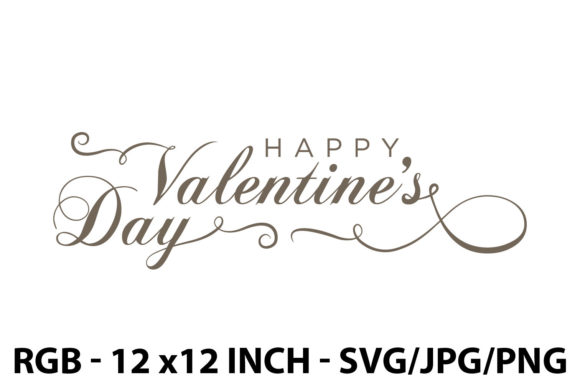
In contrast, the SVG (Scalable Vector Graphic) file included in your Valentine's Day zip package is mathematically defined. It uses points, lines, and curves rather than pixels. This means you can scale the "Happy Valentine's Day" lettering from a tiny icon on a website to a massive 12x12 inch wall decal, and the edges will remain perfectly crisp. This scalability is crucial for modern design workflows where a single logo or motif might need to appear on a business card, a billboard, and a mobile app screen simultaneously.
Why Resolution and Color Matter
Beyond the file format, the technical specifications of your graphics determine the final output quality. The inclusion of JPG and PNG files at 300 DPI (Dots Per Inch) is significant. In the printing industry, 72 DPI is standard for screens, but 300 DPI is the gold standard for physical prints. If you attempt to print a 72 DPI image on an invitation card, the text will look jagged and unprofessional. Having access to 300 DPI files ensures that your printed paper items, stationery, and announcements possess the sharpness expected of professional-grade products.
Furthermore, the use of the RGB color palette indicates that these graphics are optimized for digital vibrancy. While CMYK is traditionally used for offset printing, RGB offers a wider gamut of colors, making the reds of the hearts and the pinks of the lettering pop on screens and modern digital printers. Understanding when to use which file type is part of mastering these tools:
- SVG: Best for cutting machines (like Cricut or Silhouette), web design, and infinite scaling.
- PNG (Transparent Background): Ideal for layering over other images, creating digital invitations, or web graphics where the background needs to disappear.
- JPG: Perfect for quick sharing on social media or sending to clients who do not need transparent backgrounds.
Practical Applications: From Hobby to Business
The versatility of a 12x12 inch artboard containing high-quality lettering and vector art opens doors to countless applications. Let's explore how these elements fit into various sectors of creativity and commerce.
Handmade Crafts and Small Business
For entrepreneurs running Etsy shops or local craft businesses, time is money. Creating custom lettering from scratch for every order is inefficient. By purchasing a premium vector pack, you can instantly create handmade cards, invitations, and party decor. Imagine using the SVG file to cut vinyl decals for mugs or t-shirts. Because the vector path is clean, the cutting machine follows the lines precisely, ensuring no stray pieces of vinyl ruin the design. This efficiency allows crafters to focus on assembly and customer service rather than spending hours drawing fonts.
Graphic and Web Design
In the corporate and agency world, speed and consistency are key. Web designers can take the PNG file with its transparent background and immediately integrate it into a landing page for a Valentine's Day sale. The high resolution ensures it looks sharp on Retina displays and high-definition monitors. Similarly, branding agencies can use the lettering as a base to create a temporary logo design for a event-specific campaign. The ability to manipulate the vector nodes allows designers to tweak the curvature of the letters to match a specific brand identity, providing a custom look with a fraction of the effort.
Education and Personal Projects
Teachers and parents can also benefit greatly from these resources. Creating engaging classroom decorations or announcements for school Valentine's parties becomes effortless. You can print the 12x12 inch design at full size to create posters, or shrink it down for cupcake toppers. For students learning graphic design, analyzing how the vector nodes are constructed in the SVG file serves as an excellent educational exercise in typography and shape construction.
Common Misunderstandings and How to Avoid Them
Despite the ease of use, there are common pitfalls users encounter when working with digital graphics elements. One frequent assumption is that all "high resolution" files are the same. As mentioned earlier, using a JPG meant for the web (72 DPI) for a print project will result in disappointment. Always verify that your file is indeed 300 DPI before sending it to a professional printer.
Another misunderstanding involves the transparent background. Users sometimes open a PNG in software that defaults to a white background, assuming the transparency is broken. In reality, the software is simply displaying a default canvas. To utilize the transparency effectively, ensure you are placing the PNG layer above another image or colored background in your editing software.
Additionally, while the RGB color palette is vibrant, those planning to use professional offset printing services should be aware that colors may shift slightly when converted to CMYK. For most home printers and digital press runs, RGB files work beautifully, but for large-scale commercial printing, a soft-proof conversion is recommended to manage color expectations.
Integrating Valentine's Art into Modern Workflows
The integration of pre-made vector art into modern workflows represents a shift towards smarter, not harder, creativity. It democratizes design, allowing individuals without years of typography training to produce stunning visuals. This aligns with the broader trend of the "creator economy," where individuals leverage digital tools to build brands and share content.
Consider the workflow of a social media manager. With a zip file containing SVG, JPG, and PNG options, they can prepare a month's worth of content in minutes. They might use the vector art to animate a story on Instagram, the JPG for a Facebook post, and the PNG for a Pinterest graphic. This multi-format approach ensures that the brand presence is consistent across all platforms while adapting to the technical requirements of each.
Conclusion: Elevating Your Creative Output
In conclusion, the Happy Valentine's Day lettering and single vector artwork package is more than just a collection of images; it is a toolkit for expression. Whether you are designing a logo, crafting stationery, or decorating a party, the quality of your source material dictates the quality of your final product. By understanding the strengths of SVG, JPG, and PNG formats, and respecting the importance of 300 DPI resolution, you can unlock the full potential of these digital assets.
Embrace these tools to streamline your process, enhance your professional offerings, and bring a touch of polished elegance to your Valentine's Day projects. In a world saturated with generic clip art, leveraging high-quality, scalable vector elements allows your work to stand out with clarity, precision, and heart.