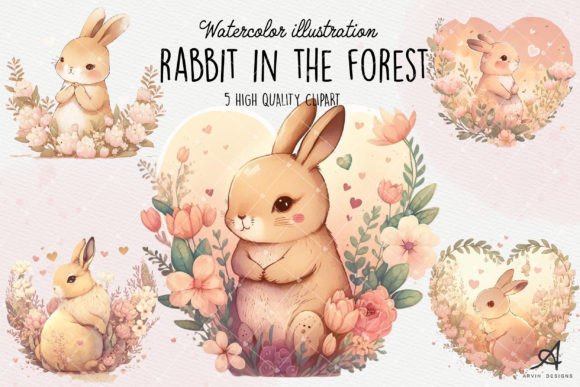
Integrating Cute Rabbit in the Forest Clipart into Professional Creative Workflows
In the landscape of modern digital design, the distinction between a generic project and a memorable brand asset often lies in the quality and versatility of the visual elements employed. For professionals ranging from small business owners to freelance graphic designers, sourcing high-resolution imagery that balances aesthetic charm with technical utility is a critical step in the production process. The Cute Rabbit in the Forest Clipart collection represents more than just a set of illustrations; it serves as a foundational asset library designed to streamline workflows across sublimation printing, digital marketing, and product packaging. By understanding how to integrate these specific resources effectively, creators can enhance efficiency while maintaining a high standard of visual consistency.
Technical Specifications as a Workflow Foundation
Before diving into creative application, it is essential to evaluate the technical parameters of any digital asset. In professional environments, low-resolution images or files with restrictive backgrounds can create bottlenecks during the execution phase. This particular clipart set addresses these common pain points by providing five distinct PNG files with transparent backgrounds. The transparency is not merely a convenience; it is a functional necessity for layering. Whether you are placing a rabbit illustration over a textured paper background for an invitation or superimposing it onto a colored t-shirt mockup for sublimation, the ability to isolate the subject without manual masking saves significant time.
Furthermore, the resolution standards set by this collection—3000px by 3000px at 300 DPI—are aligned with industry requirements for both print and high-density digital displays. A 300 DPI (dots per inch) resolution is the gold standard for physical printing. When preparing assets for sublimation, where heat transfer requires crisp edges to prevent blurring on fabric or ceramic surfaces, starting with a file of this magnitude ensures that the final output remains sharp even when scaled. For digital applications, such as website headers or social media banners, having a source file of 10 inches by 10 inches allows for downscaling without any loss of fidelity, ensuring the graphics look pristine on retina displays and mobile devices alike.
Strategic Applications in Product Development and Branding
The utility of the Cute Rabbit in the Forest Clipart extends across various stages of product development, particularly for entrepreneurs launching seasonal lines or niche branding campaigns. In the context of sublimation printing, these illustrations act as the primary visual hook. Sublimation involves transferring dye onto materials like polyester fabrics, mugs, or tote bags using heat and pressure. Because the process relies on the vibrancy and clarity of the initial digital file, the high-quality nature of these PNGs ensures that the forest theme translates accurately onto physical goods. Users can combine elements from the set to create unique compositions, allowing for limited-edition runs that feel bespoke rather than mass-produced.
Beyond physical products, these assets play a pivotal role in digital branding and marketing collateral. For bloggers and content creators, consistent visual language is key to audience retention. Incorporating these rabbit illustrations into social media posts, email newsletters, or website sidebars can establish a cohesive thematic identity, particularly for brands focused on nature, childhood education, or spring-themed promotions. The neutral yet engaging style of the artwork allows it to adapt to different color palettes and typography choices, making it a flexible component of a broader brand style guide.
Educators and publishers also find significant value in such resources. When developing learning materials, worksheets, or classroom decorations, the clarity of the line work and the friendly nature of the characters help maintain student engagement. Unlike clipart that may appear pixelated when printed on standard office paper, these 300 DPI files ensure that handouts and visual aids retain their professional appearance, reinforcing the credibility of the educational content.
Optimizing the Creative Process: From Concept to Execution
Integrating new assets into an existing workflow requires a structured approach to organization and implementation. Upon acquiring the package, the first step should be asset management. Since the purchased art comes without watermarks, it is ready for immediate deployment, but organizing the files within a logical directory structure prevents version control issues later. Designers should categorize the five PNGs based on their specific poses or elements, tagging them within their design software for quick retrieval. This preparation phase minimizes friction during the creative sprint, allowing the focus to remain on composition rather than file hunting.
When creating holiday cards or unique compositions, the modularity of the set offers distinct advantages. Rather than being locked into a single static image, users can deconstruct the scene. You might isolate the rabbit from the forest background elements to place it in a completely different setting, or layer multiple elements to create depth. This flexibility supports an iterative design process where variations can be tested rapidly. For instance, a marketer could generate three different versions of a social media ad by simply rearranging the clipart elements against different background colors, A/B testing which composition yields better engagement before committing to a full campaign rollout.
Compatibility is another crucial factor in workflow efficiency. These PNG files are universally compatible with major design platforms, including Adobe Photoshop, Illustrator, Canva, and Procreate. This cross-platform usability ensures that teams working in different software environments can collaborate seamlessly. A freelancer using Procreate on an iPad can sketch a layout, export it, and have a partner refine the typography in Photoshop using the same source assets without format conversion errors. This interoperability reduces technical debt and keeps projects moving forward smoothly.
Quality Control and Long-Term Asset Value
Maintaining quality control throughout the production cycle is vital for professional reputation. The high resolution of the Cute Rabbit in the Forest Clipart acts as a safeguard against common printing errors. When scaling images up for large-format packaging or banners, lower-quality files often reveal pixelation or jagged edges. With 3000px source files, there is ample room to enlarge the graphics for point-of-sale displays or event signage while retaining crisp lines. This scalability future-proofs the investment, allowing the same assets to be repurposed for different mediums months or even years after the initial purchase.
Moreover, the absence of watermarks in the final purchased files eliminates the need for tedious editing workarounds. In previous eras, designers often had to spend hours cloning out watermarks or negotiating licenses for clean versions. Having immediate access to clean, high-fidelity art streamlines the path from concept to market. It allows businesses to react quickly to trends; if a "forest friend" theme becomes popular in Q2, a company can deploy these assets immediately without waiting for external vendors to deliver clean files.
Practical Tips for Implementation
To maximize the return on investment from this clipart set, consider the following practical implementation strategies:
- Layer Management: Always keep the original PNGs on a separate layer in your design software. This non-destructive workflow allows you to adjust opacity, apply filters, or mask parts of the image without altering the original source file.
- Color Harmonization: While the illustrations are pre-colored, they can be adjusted using hue/saturation tools to match specific brand guidelines. Ensure that any recoloring maintains the integrity of the shading to avoid a flat, unnatural look.
- Contextual Pairing: Pair these forest-themed elements with complementary typography. Handwritten or serif fonts often work well with the organic, whimsical nature of rabbit illustrations, whereas bold sans-serifs can create a modern contrast suitable for contemporary packaging.
- Mockup Testing: Before finalizing any sublimation design, run a test print on a scrap piece of material. This verifies that the colors translate correctly from the screen to the physical medium, ensuring the 300 DPI resolution results in the expected sharpness.
Ultimately, the value of the Cute Rabbit in the Forest Clipart lies in its ability to serve as a versatile building block for diverse creative endeavors. Whether used to craft a heartfelt invitation, design a best-selling sublimation product, or elevate a corporate presentation, these assets provide the technical reliability and aesthetic appeal necessary for professional success. By treating these illustrations as integral components of a well-planned workflow, creators can achieve higher productivity and superior outcomes in their projects.