Integrating Easter Village Sublimation 300DPI Assets into Professional Creative Workflows
In the fast-paced world of digital design and physical product creation, the quality of your source assets dictates the ceiling of your final output. Whether you are a small business owner launching a seasonal collection, a marketer preparing social media campaigns, or a hobbyist crafting personalized gifts, the foundation of your project lies in the resolution and versatility of your graphics. This is where high-resolution resources like Easter Village Sublimation, 300dpi become critical components of a successful workflow. These illustrations are not merely decorative images; they are functional tools designed to bridge the gap between digital concepts and tangible realities.
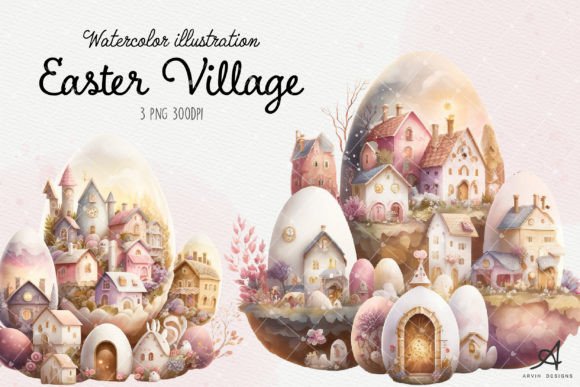
When we discuss integrating these assets, we are looking at a process that spans from initial planning to final execution. The specific package described—featuring three PNG files with transparent backgrounds, sized at 3000px x 3000px (or 10"x10") at 300 DPI—represents a standard of quality that supports professional-grade outcomes. Understanding how to leverage this specific resolution and format allows creators to maximize efficiency while maintaining strict quality control across various mediums, from sublimation printing to web branding.
The Strategic Value of High-Resolution Source Files
Before diving into the application, it is essential to understand why the technical specifications of Easter Village Sublimation, 300dpi matter in a broader production context. In professional workflows, "high quality" is often a subjective term, but in printing and digital scaling, it is mathematical. A resolution of 300 dots per inch (DPI) is the industry benchmark for sharp, crisp print output. When you utilize assets that meet this standard, you eliminate the risk of pixelation, blurring, or artifacts that can degrade the perceived value of your product.
The inclusion of transparent backgrounds in these PNG files is another crucial workflow enhancer. For designers, time spent manually removing backgrounds in software like Photoshop or GIMP is time subtracted from creative composition. By starting with clean, pre-isolated elements, you streamline the assembly phase. This compatibility allows for immediate layering over different colored substrates in sublimation or seamless integration into complex web layouts without the need for extensive post-processing. The 3000px dimensions provide ample room for scaling down for social media icons or maintaining full size for large-format prints, ensuring consistency across all brand touchpoints.
Pre-Production Planning and Asset Organization
Effective use of any digital asset begins before the design software is even opened. Integrating Easter Village Sublimation, 300dpi into your routine requires a structured approach to file management and project scoping. For entrepreneurs and freelancers managing multiple client projects or product lines, organization is key to preventing bottlenecks.
Upon acquiring the package, the first step in your workflow should be verification and归档 (archiving). Since the purchased art comes without watermarks, ensure you store the original high-resolution files in a secure, backed-up location separate from your working drafts. This preserves the master copy for future reuse. Consider organizing your directory structure by season, project type, or client. For instance, creating a dedicated folder for "Spring Seasonal Assets" allows you to quickly locate these village illustrations when planning next year's campaign or when a client requests a last-minute holiday addition.
During the planning phase, assess how these elements fit into your broader creative goals. Are you designing a cohesive brand identity for a local bakery's Easter promotion? Or perhaps creating a series of educational materials for a classroom? The versatility of the set allows you to combine elements to create unique compositions. Sketch out your intended layouts beforehand. Knowing whether you need the full 10"x10" canvas or just specific isolated characters helps in deciding how to crop or mask the images later, saving processing power and keeping your design files lightweight.
Execution: From Digital Canvas to Physical Product
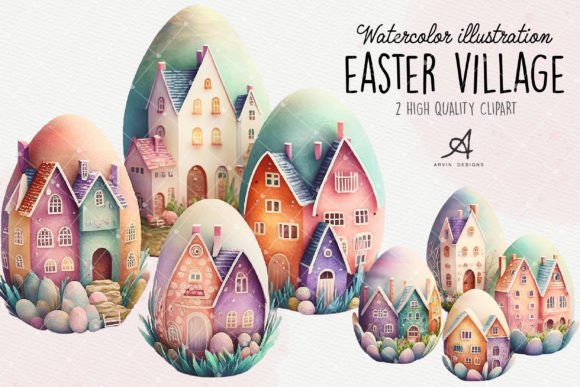
The core utility of Easter Village Sublimation, 300dpi shines during the execution phase, particularly in sublimation printing. Sublimation is a process where heat transfers dye onto materials such as plastics, polymers, and coated metals. Because the ink becomes part of the substrate, the clarity of the input image is paramount. Using 300 DPI assets ensures that fine details in the village illustrations—such as texture on rooftops or facial expressions on characters—translate perfectly onto mugs, t-shirts, tote bags, and puzzles.
When preparing these files for sublimation, remember that the process often involves mirroring the image horizontally before printing. Most design software allows you to do this non-destructively. Since the background is already transparent, you can place the village elements directly onto your template without worrying about white boxes appearing around your design. This is particularly useful for dark-colored garments where a white background would be disastrous, although note that sublimation generally works best on light or white polyester-coated items unless using specialized transfer papers.
Beyond physical products, these assets are equally potent in digital environments. For web designers and social media managers, the 3000px resolution offers flexibility. You can scale the images down significantly for website headers, email newsletters, or Instagram posts while retaining exceptional sharpness. The transparent PNG format ensures that the illustrations blend naturally with your site's background color or pattern, maintaining a professional aesthetic. When used in branding materials like packaging or invitations, the high resolution guarantees that the printed result looks premium, reinforcing brand trust and customer satisfaction.
Workflow Integration and Tool Compatibility
Integrating these assets smoothly requires understanding how they interact with your existing toolkit. Whether you are using Adobe Illustrator, Canva, Procreate, or Affinity Designer, PNG files with transparency are universally compatible. However, the workflow differs slightly depending on the platform.
- Vector-Based Software: If you are tracing these raster images to create vector paths for cutting machines (like Cricut or Silhouette), the high resolution provides a clear reference for accurate tracing, reducing the need for manual node editing.
- Raster-Based Editors: In Photoshop or similar tools, utilize adjustment layers to tweak colors or add shadows beneath the transparent elements, creating depth and dimension in your compositions.
- Web Builders: When uploading to CMS platforms like WordPress or Shopify, ensure you compress the images appropriately for web speed without sacrificing the visual fidelity needed for product zoom features.
Collaboration is another area where standardized assets help. If you are working with a team or outsourcing printing to a third-party vendor, providing files that are already at 300 DPI and correctly formatted reduces back-and-forth communication. It minimizes the risk of the printer rejecting files due to low resolution, thereby speeding up the turnaround time for your projects.
Quality Control and Long-Term Usability
A sustainable creative practice involves thinking beyond the immediate project. The Easter Village Sublimation, 300dpi set is an investment that can yield returns over multiple seasons. Because the elements can be recombined, you are not limited to a single design. One year, you might create a serene village scene for a greeting card; the next, you could isolate specific characters for a sticker sheet or a children's book illustration.
Implement a quality control checkpoint before finalizing any output. Zoom in to 100% on your screen to inspect edges and color gradients. Ensure that no compression artifacts have been introduced during your editing process. If you are printing physically, always run a test print on standard paper before committing to expensive sublimation blanks. This simple step saves material costs and ensures color accuracy, as monitor displays often differ from printer outputs.
Furthermore, consider the licensing and usage rights associated with your purchase. While these assets are purchased without watermarks and are compatible for sublimation designs, maintaining a record of your license ensures you stay compliant if your business scales or if you begin selling products featuring these designs commercially. Clear documentation protects your business and allows you to focus on growth rather than legal ambiguities.
Maximizing Creative Potential Through Composition
The true power of this illustration set lies in its modularity. The ability to combine any elements encourages experimentation. Do not feel constrained to use the images exactly as previewed. Rotate elements, resize them relative to each other to create perspective, or mix them with typography and other graphical elements to tell a unique story.
For educators, these images can be used to create engaging classroom decorations or learning aids that capture students' attention. For marketers, they serve as eye-catching visuals for spring sales campaigns. The key is to view the assets as building blocks rather than finished products. By manipulating the scale and arrangement, you create unique compositions that stand out in a saturated market.
In conclusion, the integration of Easter Village Sublimation, 300dpi into your workflow is a strategic move towards higher quality and greater efficiency. By respecting the technical specifications, organizing your assets effectively, and understanding the nuances of both digital and physical application, you can elevate your creative output. Whether you are producing a single custom gift or managing a large-scale inventory of seasonal goods, these high-resolution illustrations provide the reliability and flexibility needed to execute your vision with precision. Happy creating, and may your projects reflect the care and quality inherent in your choice of tools.